
Because almost everything before the final credit approval is a proposal, not a promise. Buyers describe the pattern in nearly the same words every time: a new interest rate, less seller financing allowed, a longer lease demanded, a higher down payment, surfacing days before closing. The usual triggers: the appraisal comes in under the price, updated financials drift from the tax returns, the credit committee overrules the underwriter who courted you, collateral review finds less than expected, or an SBA compliance check forces a restructure. Below: what each trigger changes, a worked appraisal-gap example in dollars, and the defenses that keep a retrade from becoming an ultimatum.
The retrade, at a glance
The pattern, in buyers' own words
SBA loans take forever and many don't close at all when lenders and investment committees... want to change the terms right before closing: new interest rate, less seller financing, a longer lease, a higher down payment. (a buyer, r/Entrepreneur)
Every element of that sentence is a distinct failure mode with a distinct cause, which is the good news: causes have defenses.
The five usual causes
| Trigger | What usually changes | When it surfaces |
|---|---|---|
| Business appraisal under the purchase price | Loan size cut; you fund the gap or renegotiate | Mid-process, after the appraisal order |
| Fresh interims weaker than the tax returns | Rate, loan size, or more seller standby financing | Any time new financials arrive |
| Credit committee overrules the underwriter | Any term; your contact was not the decision | At formal credit approval |
| Collateral review comes up short | Additional liens, including on personal real estate | Late underwriting |
| SBA compliance findings in the file | Structure: standby terms, injection source, lease length | Days before closing |
None of these are bad faith, mostly. They are what happens when a deal's paper reality is assembled late. The buyers who get hurt treated an early proposal letter as a commitment and let their alternatives go cold.
SOP 50 10 8.1 (effective October 1, 2026) raises the stakes: the DSCR floor for acquisitions moved from 1.15× to 1.25×, measured on historical cash flow only, so projections can no longer paper over a shortfall found in fresh interims, and total debt is now explicitly capped at the appraised business value. Both rules make the retrade triggers above bite earlier and harder on files numbered after October 1.
The appraisal gap, worked in dollars
The most common retrade is arithmetic, not malice. Take a $650,000 purchase with a standard 90/5/5 structure where the appraisal lands at $580,000:
| Line | Before appraisal | After appraisal |
|---|---|---|
| Purchase price | $650,000 | $650,000 (contract unchanged) |
| Lender's valuation basis | $650,000 | $580,000 |
| Loan the lender will size to | ~$585,000 | ~$522,000 |
| Gap you must solve | $0 | ~$63,000 |
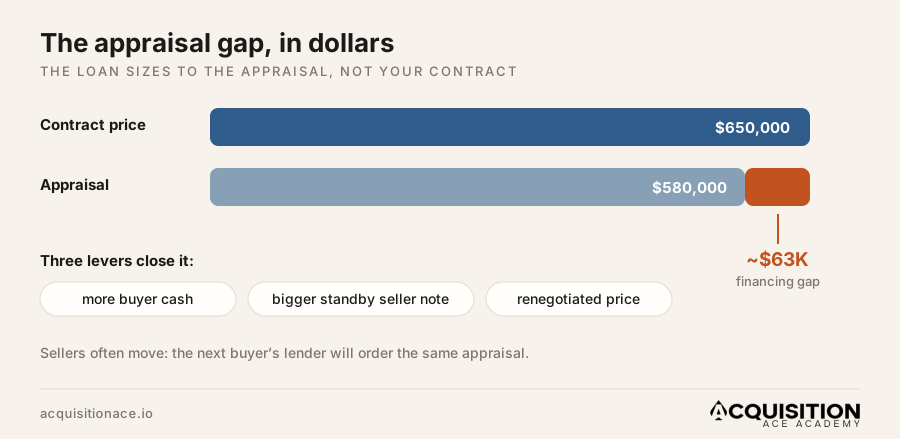
Three levers close the gap, and you should know which is yours before signing the LOI: more buyer cash, a larger seller note on standby, or a renegotiated price, and sellers facing an independent appraisal often move, because every other buyer's lender will hit the same number.
The four defenses
| Document | What it actually is | What can still move |
|---|---|---|
| Proposal / interest letter | Marketing | Everything |
| Term sheet | Intent, pre-underwriting | Rate, size, structure, all of it |
| Credit-approved commitment letter | The real approval | Only what its written conditions name |
- Know the document you are holding. Ask, in these words: is this credit-approved, and what conditions can still change the terms?
- Keep the financials fresh yourself. Monthly interims from the seller, forwarded to the lender before being asked. Early surprises are negotiations; late surprises are retrades.
- Run lenders in parallel. A warm runner-up turns a retrade into a comparison instead of an ultimatum. Three to five is the working number.
- Pre-solve the appraisal gap. Decide at LOI which lever funds a short appraisal; the table above is the conversation to have while everyone still likes each other.
Buyer's move
Put one sentence in writing to your lender after the term sheet: "Please flag any committee, appraisal, or compliance issue the week it arises, not at closing." It costs nothing, and it converts the lender's internal surprises into your early warnings. The approval timeline shows where each decision point actually sits.
Frequently asked questions
Yes, if the rate sits in a proposal or term sheet rather than a credit-approved commitment, or if underwriting findings (appraisal, fresh financials, collateral) change the file. Ask explicitly whether your letter is credit-approved and which written conditions can still move terms.
A late change to agreed terms: a higher rate, a larger down payment, more seller financing on standby, or a longer lease, typically after the appraisal or updated interims arrive. Defenses: fresh financials sent proactively, a real commitment letter, a parallel lender kept warm, and a pre-agreed plan for an appraisal gap.
The lender sizes the loan to the appraisal, not the contract: on a $650,000 deal appraised at $580,000, roughly $63,000 of expected financing disappears. The gap gets funded by more buyer cash, a larger standby seller note, or a renegotiated price, and sellers often move because the next buyer's appraisal will match.
Common enough that buyers warn each other about it in the same words: many deals do not close when committees retrade terms late. The deals that survive have fresh financials, credit-approved commitments rather than term sheets, and a second lender warm enough to switch to.
Sources
- Retrade pattern and buyer language: r/Entrepreneur and r/smallbusiness buyer threads (2024 to 2026).
- Appraisal-gap mechanics and commitment-letter hierarchy, SBA 7(a) lender practice; see our approval timeline and declines guide.
- Equity injection and underwriting framework, SBA 7(a) program; SOP 50 10 8.1 (effective October 1, 2026). See our SOP 50 10 8 changes guide.