
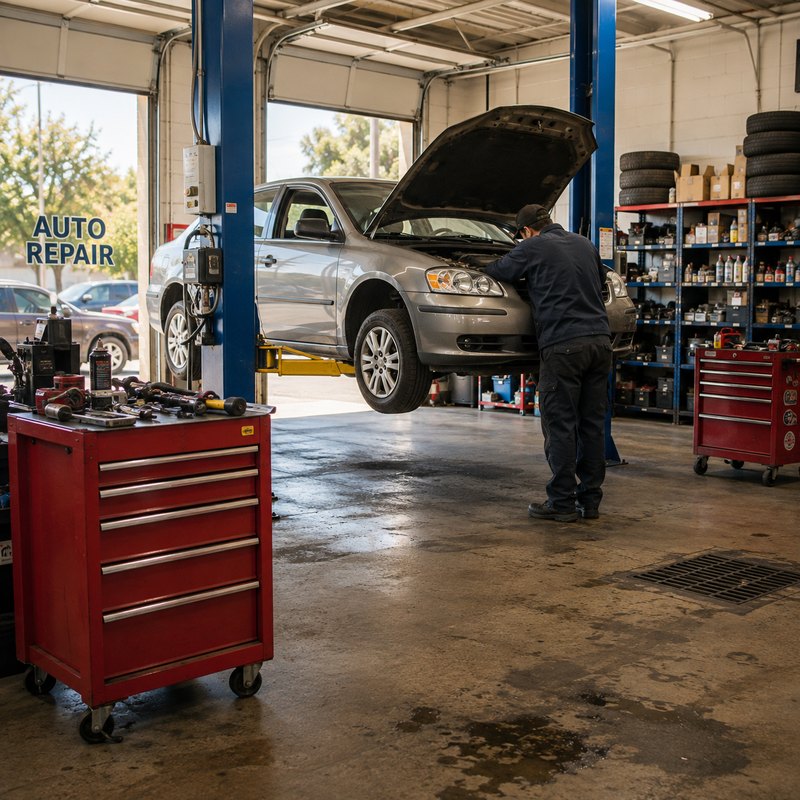
The short answer: Buy an auto repair shop on its steady customer base and retained technicians, not last month's ticket count. Expect ~2.7× SDE (a 2.0×, 4.5× band), ~10% down with an SBA 7(a) loan, and, if the building is included, a term stretching toward 25 years that lowers the payment. Confirm state repair licensing, EPA 609 and hazardous-waste compliance, and that ASE-certified techs stay.
Why auto repair works for buyers
Cars break regardless of the economy, and the average independent shop runs about $1.2M in revenue across roughly six bays. Unlike an asset-light service business, a repair shop comes with real collateral, lifts, alignment racks, diagnostic equipment, and frequently the real estate, which supports financing. Net margins run 8%, 15% industry-wide, with well-managed shops reaching 15%, 20%+. The catch: the value lives in skilled technicians and repeat customers, both of which can walk.
A repair shop is only as good as the techs in the bays and the customers who keep coming back.
Licensing & environmental compliance
Auto repair carries more regulatory weight than most service businesses:
- State motor-vehicle repair license/registration. Over 30 states require one, California's Bureau of Automotive Repair (BAR) license, plus New York, New Jersey, and Texas among them. Confirm it transfers or can be re-issued to you.
- Business license & seller's permit. Standard, plus a seller's permit for parts sales and taxable labor.
- EPA Section 609 certification. Required for any technician who services vehicle A/C, and to purchase refrigerant in containers of two pounds or more.
- Hazardous-waste registration. Most shops are Small or Very Small Quantity Generators of used oil, antifreeze, solvents, and batteries; you must register, store properly, use licensed transporters, and keep disposal manifests.
- ASE certification. Not legally required, but commercially essential, customers seek it, insurer direct-repair programs prefer it, and some parts distributors reward it.
Certificate of occupancy for automotive use
Confirm the building is zoned and permitted for automotive repair, with a valid certificate of occupancy. Environmental and zoning surprises are the most expensive way an auto deal goes sideways.
What auto repair shops cost
| Metric | Range | Anchor |
|---|---|---|
| SDE multiple | 2.0×, 4.5× | ~2.70× |
| Net profit margin | 8%, 20%+ | ~10% |
| Avg. independent shop revenue | ~$1.2M | ~6 bays |
| SBA down payment | 10% | 10% |
The 2.7× SDE anchor sits mid-band; shops with modern equipment, ASE staff who stay, and a loyal customer base earn the top of the 2.0×, 4.5× range. Note that when the deal includes real estate, the property is valued separately and financed over a longer term. See live comps on the auto repair multiples page and price a target with the valuation calculator.
Value a repair shop fast
Enter revenue, SDE, and a multiple, get a defensible range.
Diligence unique to auto repair
- Technician retention. Skilled techs are scarce. Confirm who's on staff, their ASE certs, tenure, and whether they'll stay after the sale, losing your lead tech can gut capacity overnight.
- Equipment condition & age. Lifts, alignment racks, and diagnostic scanners are expensive. Inventory them, check age and safety inspection status, and budget replacement.
- Customer mix. Retail walk-ins, fleet accounts, and insurer/DRP work carry different margins and stickiness. Fleet and repeat customers are worth more than one-time jobs.
- Environmental history. Order the used-oil and hazardous-waste records; a Phase I environmental review is common when real estate is involved.
- Real estate. Owned or leased? If leased, confirm assignability and remaining term, location is core value.
Environmental liability follows the property
Contamination from decades of oil, solvents, and underground tanks can attach to the real estate. When buying the building, insist on a Phase I environmental assessment before you close.
Real estate & financing
Many shops sit on owner-owned land, and buying it changes the math favorably. Under an SBA 7(a) loan, real estate can be financed over a longer term (toward 25 years), while the business assets amortize faster, the blend lowers your annual payment and strengthens DSCR. Plan for ~10% down and a 1.15×, 1.25× DSCR. If you lease, verify an assignable lease with real runway. Model the payment in the valuation calculator.
Go deeper on the numbers
See how much auto shop owners make and what it costs to buy one, with worked math.
Frequently asked questions
Generally a business license and seller's permit, plus a state motor-vehicle repair registration in 30+ states (e.g., California BAR). Techs servicing A/C need EPA 609 certification, and the shop must register for hazardous-waste handling. ASE isn't legally required but is commercially essential.
Roughly 2.7× SDE, within a 2.0×, 4.5× band depending on tech retention, customer base, and equipment. Strong repeat customers, ASE staff who stay, and modern equipment earn the top.
Often yes, buying owner-owned real estate lets you finance it over up to 25 years under SBA, lowering the payment and improving coverage. If you lease, confirm the lease is assignable with enough term, since location is core value.
Yes, a common SBA 7(a) acquisition. Expect ~10% down and a 1.15×, 1.25× DSCR. When real estate is included, the blended term can extend toward 25 years, reducing the payment and strengthening coverage.
Sources
- Shop revenue, margins & owner economics, WickedFile (2026); Automotive Service Association margin data.
- SDE multiples, Peak Business Valuation (2025).
- Licensing, EPA 609 & hazardous waste, state mechanic-license guide; US EPA MVAC resources.