
The numbers
| Measure | Figure | Basis |
|---|---|---|
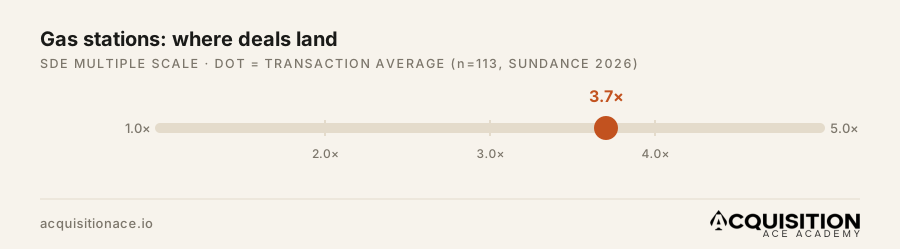
| SDE multiple | 3.70× average | Across 113 reported gas station transactions |
| $150K-SDE station | ~$555,000 | Derived at the transaction average |
| $200K-SDE station | ~$740,000 | Derived at the transaction average |
| $300K-SDE station | ~$1,110,000 | Derived at the transaction average |
The sample is big for a single vertical: 113 reported deals, against 34 for trucking and 32 for car washes. That depth makes the 3.70× average a reliable anchor, and it also means the listings you see priced far above it are making a specific claim (real estate, fuel contract, store volume) that diligence has to verify.
Where stations sit in the automotive aisle
| Vertical | SDE multiple | Reported deals |
|---|---|---|
| Car washes | 4.73× | 32 |
| Gas stations | 3.70× | 113 |
| Equipment rental & dealers | 3.55× | 31 |
| Towing companies | 3.44× | 12 |
| Convenience stores | 2.82× | 100 |
| Auto repair & service | 2.70× | 247 |
| Car dealerships | 2.32× | 20 |
Two comparisons carry the story. A station prices a full turn above a standalone convenience store (3.70× vs 2.82×) because fuel brings traffic a standalone store never sees. One precision that matters: these SDE multiples price the operating business; when real estate is part of a sale, it is valued separately, on top of the multiple, which is also why land-included listings read higher than the operating anchors on this page. And it prices a turn below a car wash, where recurring membership revenue has been repricing the whole class.
What moves a specific station off the average
| Lever | Prices above the average | Prices below |
|---|---|---|
| Real estate | Land, tanks, and canopy in the deal | Leasehold with a short remaining term |
| Inside sales | A real store: food service, strong category mix | Fuel-only or a thin kiosk |
| Fuel contract | Assignable supply terms a buyer can live with | An expiring or above-market supply agreement |
| Environmental file | Clean tank tests and compliance records | Open remediation, aging single-wall tanks |
| Licenses | Lottery, tobacco, alcohol in place and transferable | Licenses that die with the seller |
Buyers trading listings in forums run the same arithmetic on every deal: the asking price plus fuel and store inventory, the gallons, the inside-sales share, and the rent or the land. The listing convention of quoting price plus inventory matters, because the fuel load and store stock at close are real cash on top of the headline number. The financing math for a worked deal lives on the cost-to-buy page, and the full buyer's guide is here.
Deal size and the multiple
One honest limitation of transaction averages: the dataset reports multiples, not deal sizes, and reported Main Street transactions skew toward smaller companies, so the averages above describe the heart of that market. Size changes the auction. At $500K+ of SDE the buyer pool shifts from individual owner-operators to searchers, funds, and family offices competing for the same listing, and gas stations at that size routinely price above the table. Read the average as the floor of the conversation on a larger deal, not the ceiling, and compare businesses to others of their own size before comparing across industries.
Reading a gas station listing against the average
The 3.70× anchor is an operating-business number, which makes the first question on any listing structural: is the real estate in the deal? A leasehold station and a land-included station with identical SDE are different purchases at different prices, and listings are not always explicit about which one you are reading. Second, decompose the revenue: fuel gallons at thin margin versus inside sales at real margin, because a station that is 90% fuel is a traffic business with a store-shaped rounding error, priced differently from a store with pumps. Third, the two contracts that outlive the seller: the fuel supply agreement (term, pricing formula, assignability) and the leases or licenses behind lottery and age-restricted categories. A listing that answers all three in writing deserves the average; one that answers none of them deserves an offer built on your numbers, not theirs.
The convention of quoting price plus inventory means the headline understates cash to close: fuel in the tanks and store stock are counted and paid separately. Budget them with the worked capital stack, and run the full diligence list in the buyer's guide.
Frequently asked questions
An average of 3.70× SDE across 113 reported transactions, one of the deeper samples in the dataset. Fuel volume brings the traffic, but the inside store carries the margin, and the two together with the real estate decide where a specific station lands.
It varies by listing: stations sell both with the property and as leasehold businesses, and the two price very differently. Read every listing for whether land, tanks, and canopy are in the number, and value them separately in diligence.
In the same transaction dataset, gas stations average 3.70× SDE against 2.70× for auto repair across 247 deals. The premium tracks the asset weight and the store: fuel infrastructure, real estate that often travels with the deal, and convenience sales layered on top.